
Lasagne is perhaps the most iconic dish from Emilia-Romagna — and one of the most misunderstood outside Italy. The real Bolognese is made with minced beef, tomato purée and white wine, not canned tomatoes and oregano. And the sauce is always held together by a silky béchamel, never just cheese. The result is a dish that is rich and layered without being heavy.
The secret behind a great lasagne is time and patience — a meat sauce that has simmered long enough for the flavours to develop. Use homemade fresh pasta if you can, but good dried sheets work perfectly well. The most important thing is not to rush.
Tips and variations
- Vegetarian version: Replace the meat with lentils and mushrooms for a rich, plant-based alternative.
- Make ahead: Lasagne is even better the next day. Assemble it the evening before, refrigerate and bake when needed.
- Fresh pasta: If you have the time, homemade pasta sheets make a noticeable difference to the texture.
- Extra cheesy: Add a layer of ricotta between the pasta sheets, or mix some mozzarella into the topping.
🍷 Wine pairing
Lasagne needs a wine with enough body and acidity to stand up to the richness of the béchamel and meat sauce.
Chianti Classico — the classic pairing. Bright acidity, cherry fruit and earthy notes that cut straight through the richness.
Barbera d’Asti — a touch more fruit-forward and slightly lighter, but still with enough structure to match the dish perfectly.
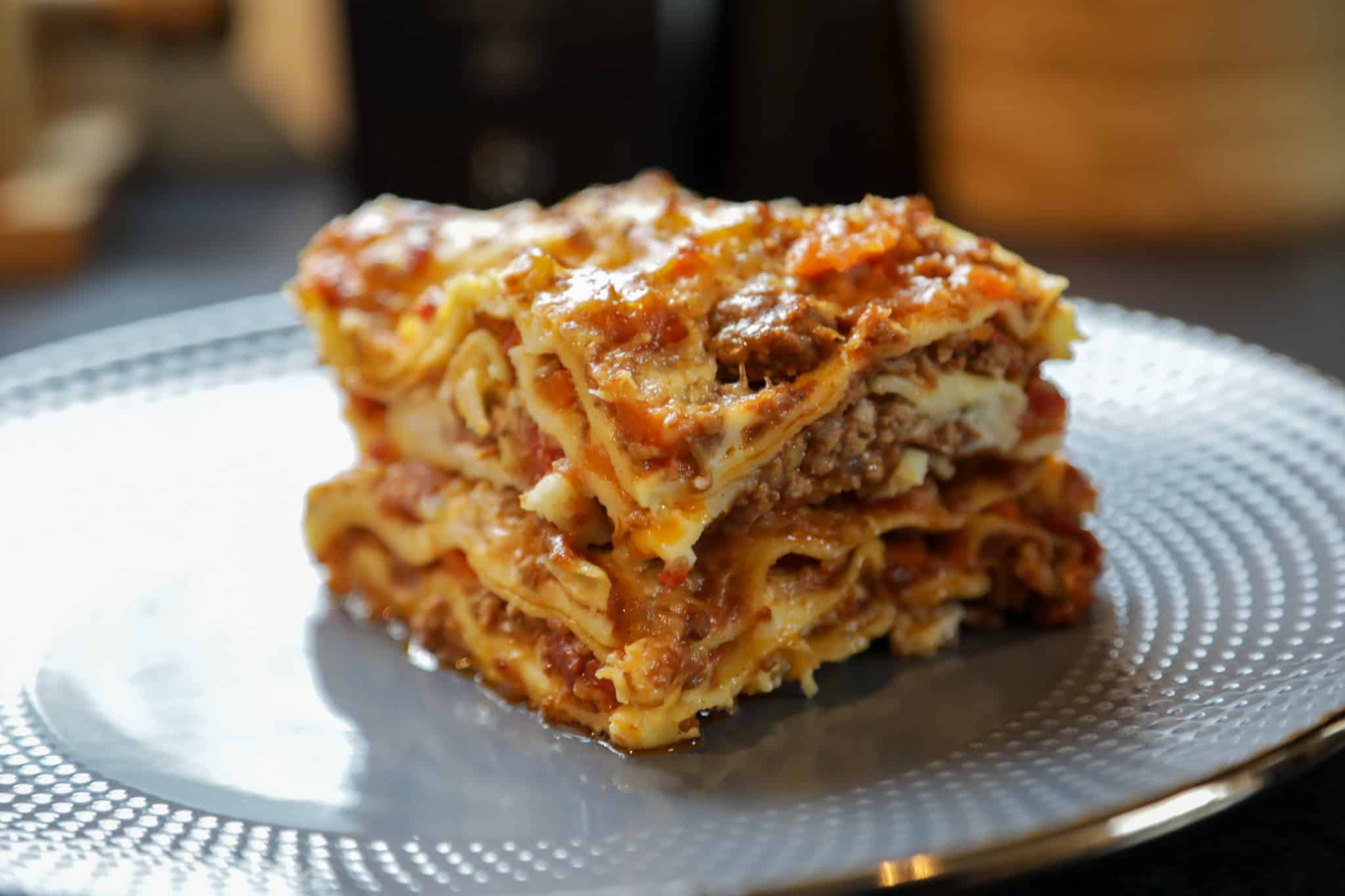

Classic Lasagne
Ingredients
Method
- Sauté the onion and garlic in a little oil over medium heat for about 5 minutes until soft and translucent.
- Add the minced beef and brown well. Stir in tomato purée and cook for 2 minutes. Add canned tomatoes and oregano, season with salt and pepper. Simmer the meat sauce for at least 30 minutes.
- Make the béchamel: melt the butter, stir in flour and cook for 2 minutes. Gradually add milk, whisking constantly, until you have a smooth, thick sauce. Season with salt, pepper and freshly grated nutmeg.
- Preheat the oven to 180 °C (fan 160 °C).
- Spread a little béchamel in the base of an ovenproof dish. Layer lasagne sheets, meat sauce, béchamel and a little Parmesan. Repeat for 3–4 layers, finishing with béchamel and a generous layer of Parmesan.
- Bake for 45–50 minutes until golden and bubbling. Leave to rest for 10 minutes before serving.
Nutrition
Tried this recipe?
Let us know how it was!FAQ
Do I need to pre-cook the lasagne sheets?
No — dried lasagne sheets cook through perfectly in the oven, as long as the sauces are loose enough. If in doubt, add a splash of water to the meat sauce before assembling.
Can I freeze lasagne?
Yes, lasagne freezes very well. Assemble and bake, then cool completely before covering and freezing. It keeps for up to 3 months. Reheat in the oven at 180 °C for about 30–40 minutes from frozen.
How many layers should a lasagne have?
Three to four layers is ideal. More than that and it becomes difficult to cook through evenly. Each layer should be clearly defined: pasta sheet, meat sauce, béchamel, Parmesan.
What’s the difference between lasagne and lasagna?
They’re the same dish. “Lasagne” is the plural form used in Italian (and British English), while “lasagna” is the singular — and the spelling commonly used in American English. In Italy, the dish is always referred to as lasagne al forno.