
Pasta Carbonara is one of Rome’s most iconic pasta dishes — and one of the most misunderstood. The creamy sauce is not made with cream, but with eggs, finely grated cheese, and starchy pasta water emulsified to silky perfection. Guanciale (salt-cured pork cheek) is the traditional choice and provides a rich, nutty flavour that pancetta cannot match. Make it correctly once, and you’ll understand why Romans never need cream.
Tips and variations
Use guanciale, not pancetta or bacon. Guanciale has more fat and a rounder flavour that is the very foundation of carbonara. Pancetta can be used in a pinch, but avoid smoked bacon — it dominates the flavour in the wrong direction.
Never use cream. There is no traditional carbonara made with cream. Cream changes the dish from an emulsified egg sauce into a cream sauce — two completely different things. The secret is the starch in the pasta water that binds the sauce.
Let the pasta cool slightly before adding the egg mixture. If the pan is too hot, the egg will scramble and you’ll get scrambled eggs instead of a creamy sauce. Remove the pan from the heat and wait 30–60 seconds before stirring in the cheese and egg yolks.
Save plenty of pasta water. Starchy pasta water is the glue in the sauce. Reserve at least 300 ml and use it gradually to adjust the consistency — the sauce should glide around the pasta, not clump.
Use both Pecorino and Parmesan. Pecorino Romano provides a salty, sharp flavour, while Parmesan contributes nuttiness and roundness. The combination gives a more balanced and complex sauce than using just one of them.
🍷 Wine pairings
Frascati or Frascati Superiore: Carbonara originates from the Rome region, and the wines from Castelli Romani — where Frascati is produced — are the classic local match. Fresh, light, and with just enough acidity to cut through the richness of guanciale and egg.
Gavi di Gavi (Cortese): A dry white wine from Piedmont with good minerality and freshness. More widely available than Frascati and works excellently with creamy, egg-based sauces.
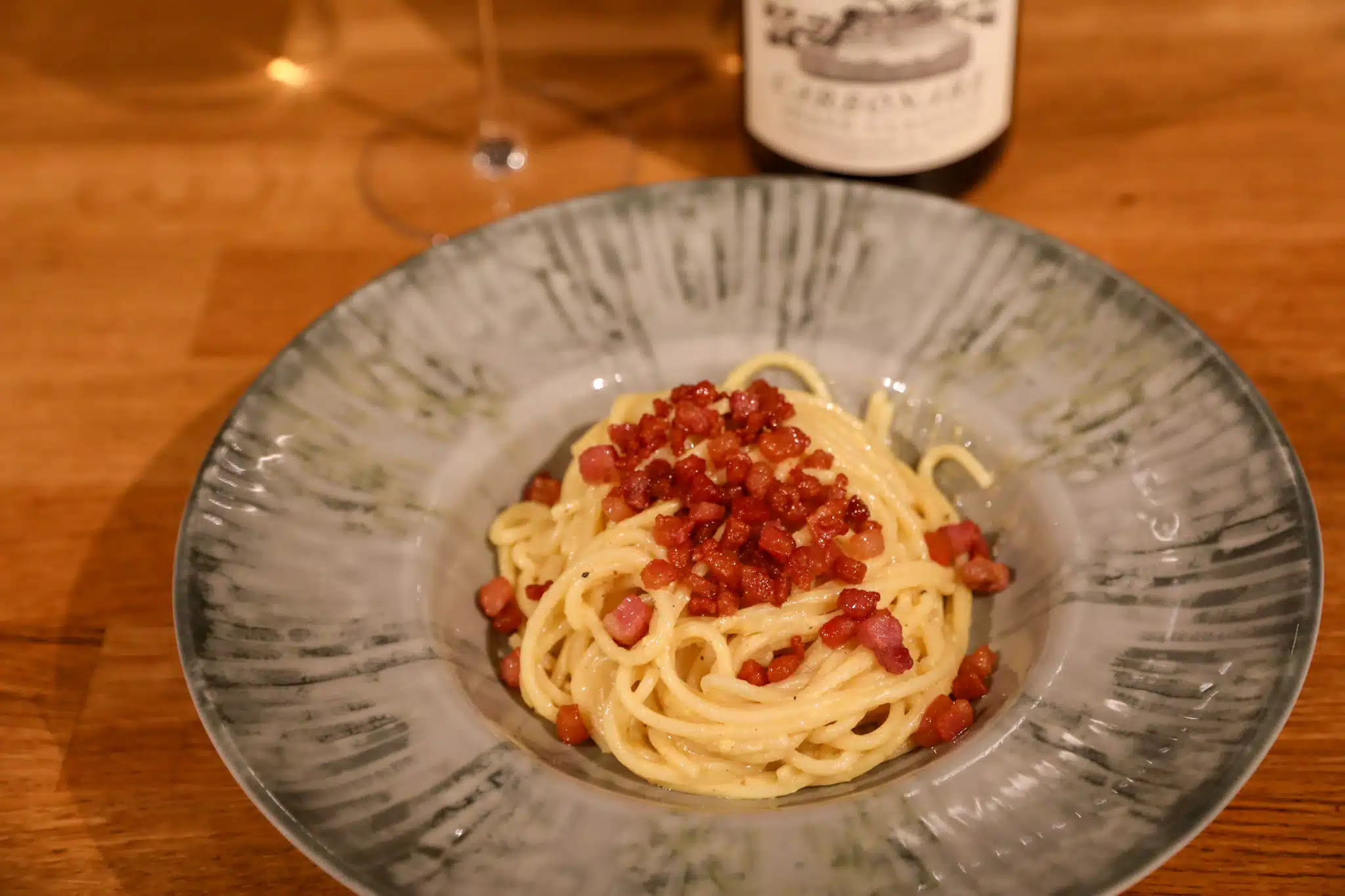

Pasta Carbonara
Ingredients
Method
- Bring a large pot of well-salted water to a boil.
- Fry the guanciale in a large frying pan until crispy. Remove the guanciale from the pan but leave the fat.
- When the pasta has about 3 minutes left to cook, ladle out about 300 ml pasta water and add it to the pan with the guanciale fat.
- Add the par-cooked pasta to the pan. Let the water absorb into the pasta, like a risotto, until the pasta is al dente.
- Remove the pan from the heat and let it cool slightly. Mix finely grated parmesan, Pecorino, egg yolks and plenty of black pepper in a bowl. Add the mixture to the pan and stir quickly until the sauce becomes creamy.
- Serve immediately with guanciale on top.
Tried this recipe?
Let us know how it was!Frequently asked questions
Can I use cream in pasta carbonara?
No — authentic carbonara never uses cream. The sauce is made from egg yolks, finely grated cheese, and starchy pasta water emulsified to a creamy consistency. Cream changes the texture and flavour profile and makes the dish heavier than it needs to be.
Can I substitute guanciale with bacon or pancetta?
Pancetta works as a decent alternative and is easier to find in most shops. Avoid smoked bacon — the smoked flavour takes over and changes the character of the dish. Guanciale is available at specialty stores and many well-stocked supermarkets.
Which pasta works best for carbonara?
Rigatoni is the traditional Roman choice — the rough surface and hollow tubes hold the sauce perfectly. Spaghetti and tonnarelli are also classic alternatives. Avoid pasta with a smooth surface like penne lisce, as the sauce does not cling as well.
Why does it turn into scrambled eggs?
This happens when the pan is too hot when you add the egg mixture. Egg proteins coagulate above 65°C and produce lumpy scrambled eggs instead of a creamy sauce. Always remove the pan completely from the heat and wait a moment before stirring in the egg and cheese. Add pasta water gradually while stirring constantly.
Can I make carbonara in advance?
Carbonara is a dish that must be served immediately. The sauce thickens and the pasta absorbs moisture quickly, making the dish lumpy and dry when reheated. You can prepare the egg mixture and fry the guanciale in advance, but the combining should be done right before serving.